
Your Cart is Empty

Agile Workspaces
What Happens When You Make Your Workspace Agile?
Agile and adaptable workspaces are designed to support flexibility and collaboration. These kinds of spaces are tailored for different tasks and working styles, including hot desking, quiet zones, and collaborative spaces. Agile working environments feature modular furniture, hot-desking systems, mobile storage and multipurpose zones. This approach to space design contrasts with traditional permanent seating arrangements lacking the ability to accommodate different types of working models.
A study by Steelcase (2020) found that employees in agile workspaces reported 24% higher satisfaction, 35% greater agility and 20% more innovation. Additionally, a study by Gensler concluded that agile workspaces result in a 40% increase in collaboration.
These are some of the key benefits of agile workspaces:
- Enhanced flexibility and adaptability
- Improved collaboration and innovation
- Enhanced employee well-being
- Support for hybrid and remote work
- Adaptabilityto fluctuating team sizes.
- Easier space reconfiguration without needing costly renovations
As far as space costs, a study by JLL explained that companies with well-designed agile workspaces reported a 10% reduction in space costs.

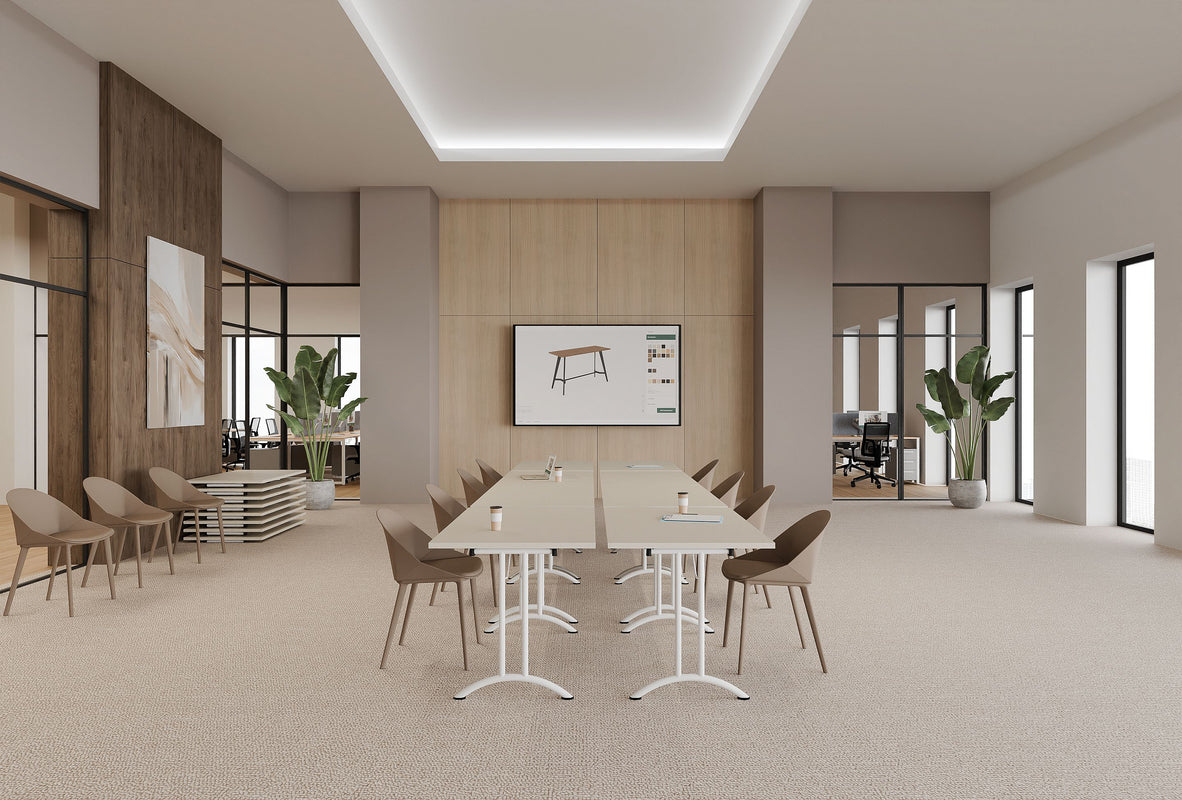
Easily transform your office space on demand

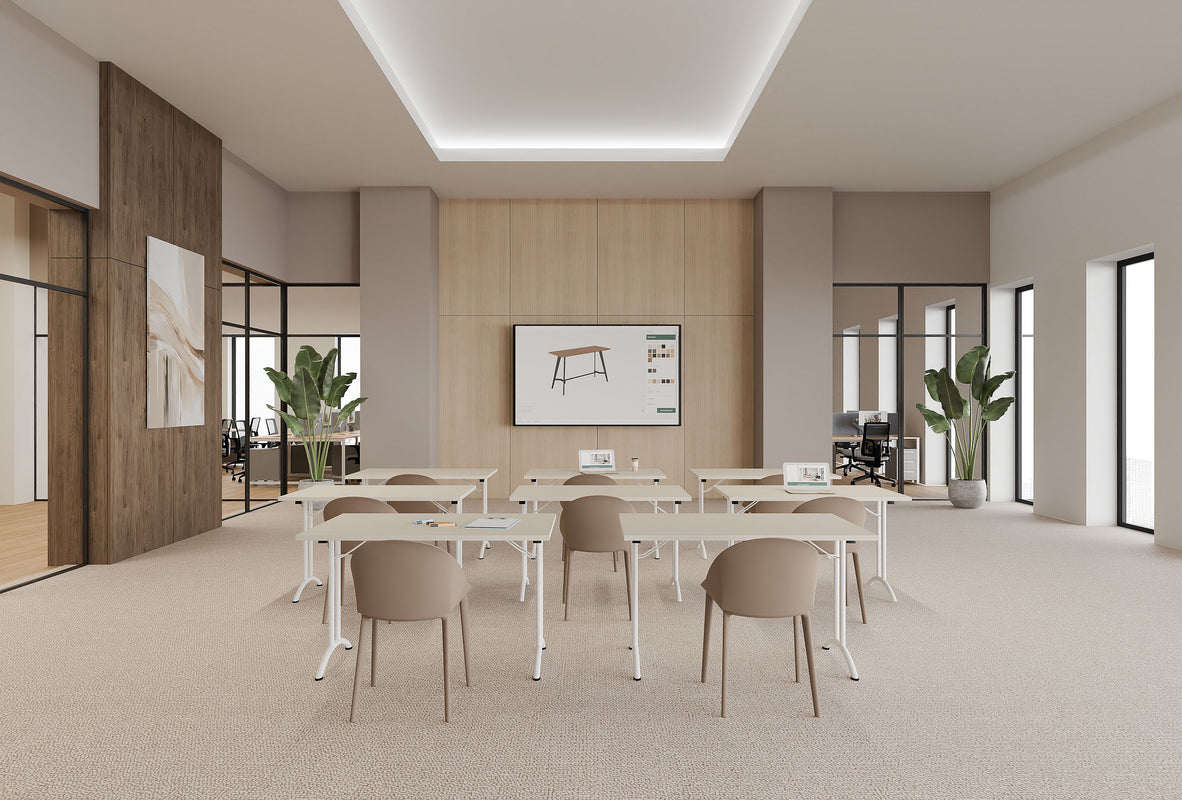
Change your space layout in minutes effortlessly

Ideal for quick space change into collaboration zones for workshops, presentations and much more.
Holding presentations and training sessions requires a classroom-style room. This layout should offer clear visibility for all participants where everyone sits in rows facing forward the screen and the speaker. Mobile, agile furniture can easily reconfigure the space according to the attendees group size.
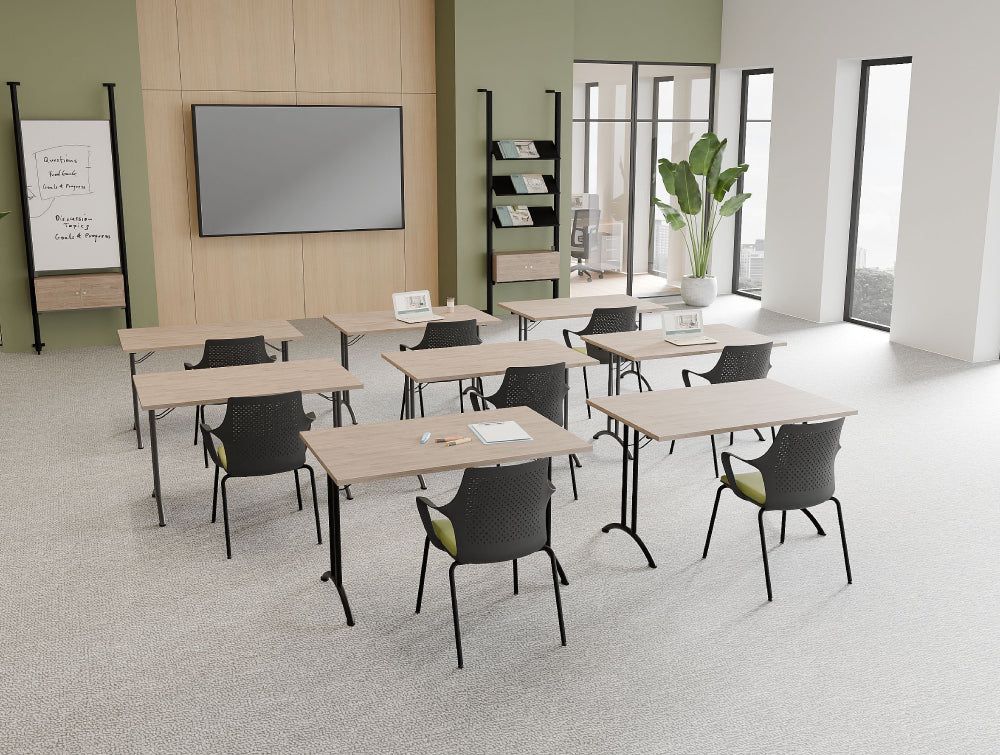
Make sure that every attendee gets equal amounts of attention, feedback and a chance for open discussion. Placing the presenter in the center of the room while all students are positioned around the presenter. Some shaped configurations are L-shaped, O-shaped and U-shaped workshops. Each space configuration places the teacher in the middle assuring teacher-student engagement, easy and open communication and immediate feedback during the workshop.
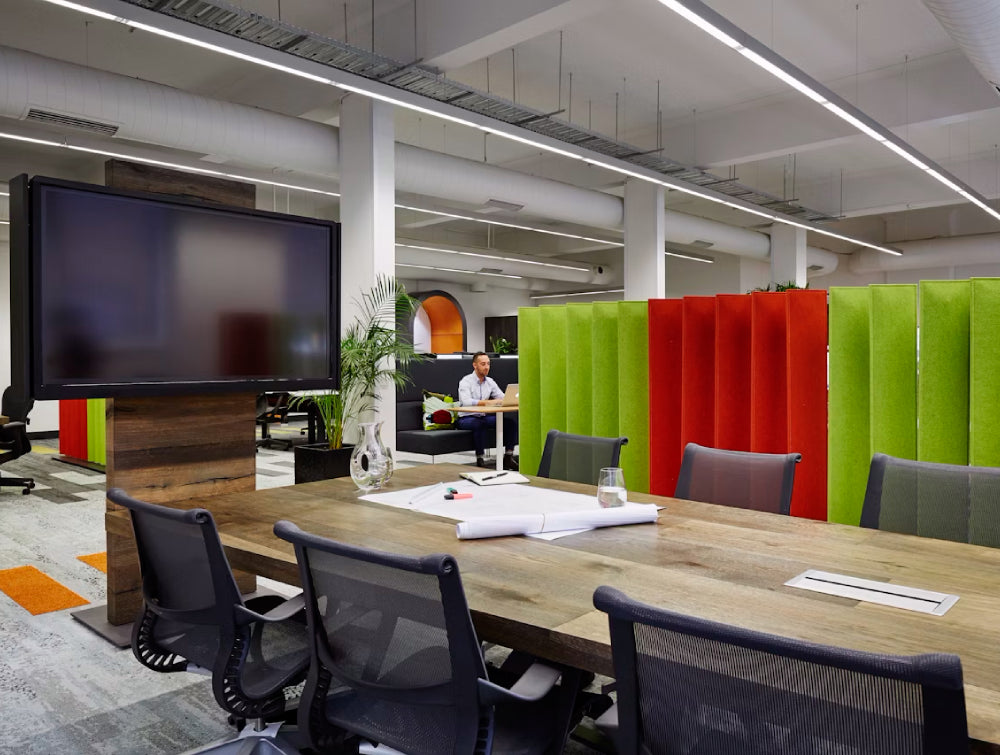
Modular configurations enable dynamic spatial planning that accommodates the evolving needs of townhall-style meetings. By allowing rapid transitions between presentation, discussion, and breakout formats, they foster inclusivity, engagement, and spatial efficiency. This flexibility supports both cognitive focus and group interaction — essential for large-scale communication in agile work environments.
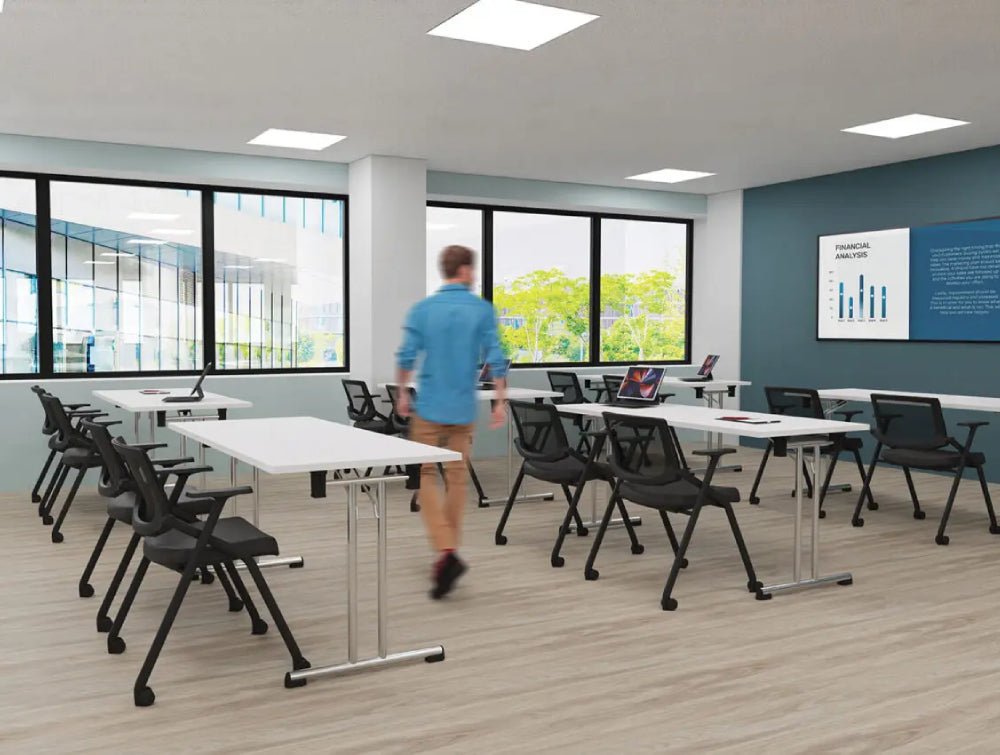
Agile furniture lets teams change how they work without changing the fit out.
A single setting can be opened up for group collaboration or broken into smaller zones when separate projects are running.
Modular desks, mobile screens and adaptable seating mean space is not tied to one layout. This helps designers and fit out contractors support changing headcounts and work styles using the same furniture kit.
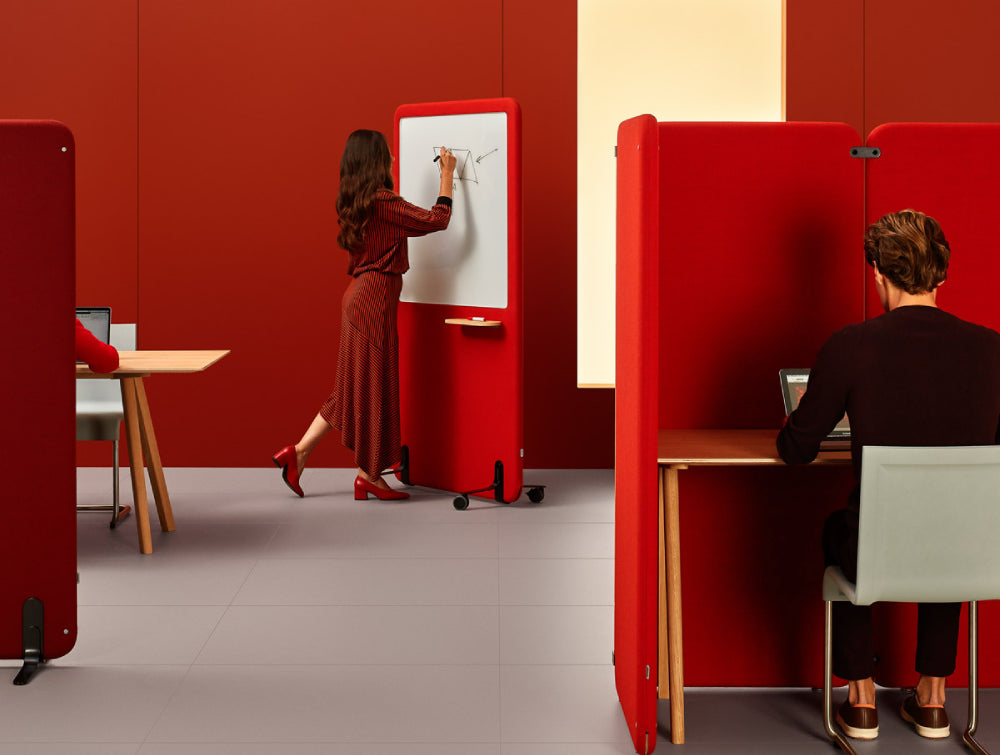


Transform in 3-2-1
Get In Touch
Do you have a fit out project to discuss?
Please get in touch with us.
SEARCH